Thursday, 15 May 2014

What A Spectacle!

  As there is a band of warm air moving through Britain this week, I decided to set my moth trap up to see what we could catch, and compare it to last week's. The catch was quite fascinating as always and a whole new array of different species of moth ended up being caught, including all these...

Ruby Tiger the second species of Tiger moth I have ever caught, it was the first species of moth we potted and an amazing delight to see. I think most people don't even know these moths exist - they don't know what they are missing.

Ruby Tiger Moth

It was great to photograph, especially in the sun, and probably one of the best (colour wise) moth we caught through the session.
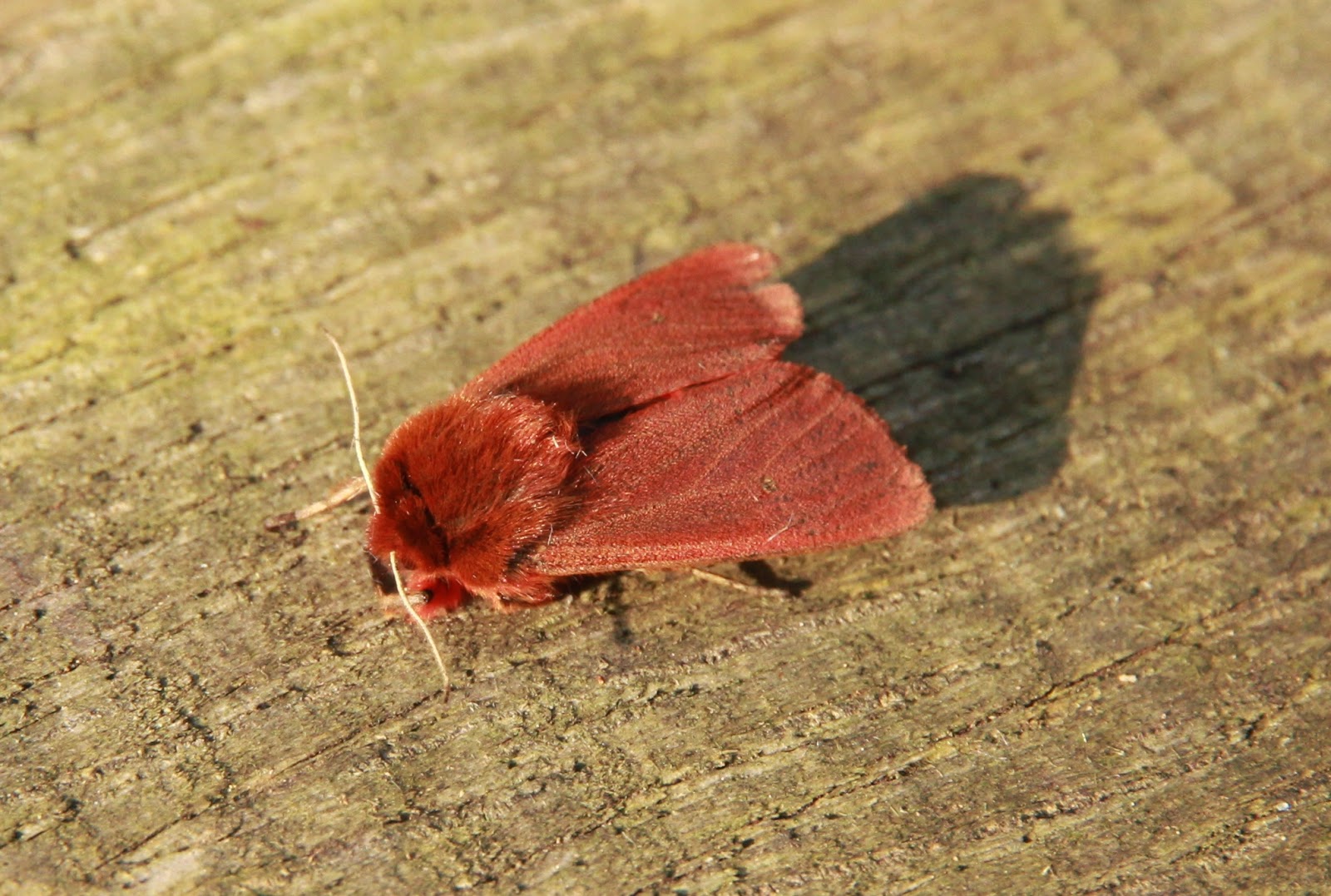
Ruby Tiger Moth

As you can see in this picture, this species of moth isn't just red on the top, but is a gorgeous scarlet red underneath as well. 

Ruby Tiger Moth

Even though I have caught these moth several times before, it was the first time this year I had caught a Hawk Moth, let alone a Poplar Hawk moth, and best of all there were two in the trap. That orangey pink colour of the under wing is really quite striking.

Poplar Hawk Moth

Another new species of moth for us included this moth called a Spectacle Moth; you might guess where it gets it's name from. I think it is just incredible the range of moths you can get and how they have evolved. 

Spectacle Moth

There is another species of moth that looked almost identical to the Spectacle Moth and this is the Dark Spectacle, however you can tell the difference because of how rough the edge of the Spectacles wing is compared to the likes of the Dark Spectacles wing which is smooth. They also come out at different times of year.

Spectacle Moth

Another species of moth this morning was the Brimstone; a beautiful species which stands out from the crowd .We had a total of 8 in the trap.


This in one of my dads favorite moth, it is called the Buff Ermine, a beautiful moth and the first one we had caught this year. 

Buff Ermine

The biggest moth we caught (apart from the Poplar Hawk Moth) was this Waved Umber, this moth really caught your eye and looked absolutely stunning, but wouldn't stay still for a picture!!!

Waved Umber

At first I thought this moth was a butterfly, however it was a moth called a Clouded Silver, this was one of the first moths that caught our attention inside the trap. 

Clouded Silver

Once we caught and potted all the moths on the inside of the trap we started scanning the grass on the outside of the trap, we came across two new species of moth for the garden; this first one called a Broken Barred Carpet.

Broken Barred Carpet

The second was a moth called a Pale Prominent. This moth reminded me of a dragon even though it doesn't look like it in the picture. It looked just like a piece of  tree bark and was rather hard to spot in the grass.

Pale Prominent

I hope you enjoyed the moths just as much as I did, I am becoming Wilde About Moths as well now!  All the moths are safe in the shed and will be set free after dark so the birds don't get them.

Sunday, 11 May 2014

Last Walk with the Swarovski Bins

So my time with the Swarovski Binoculars has come to an end however I want to share my final experience with them...

A walk at my local patch...

My home is located in some beautiful British countryside in the heart of Cheshire. It is a stunning walk through the farmland and woodland and alongside the River Weaver, so I couldn't wait to use the binoculars out on my patch.


Before you even start the walk you have to cross a bridge over a railway line. The banks of the train line are covered in Bramble and Nettles, making great homes for both Lesser and Common White Throat. The view wasn't brilliant due to the bad weather; however the quality of the picture through the bins was brilliantly clear and I managed to pick out all the stunning features of the Common White Throat.

As we continued into the fields of my patch, we started to see some Corvids emerging from the freshly planted maze fields, most of which were Jackdaws, Carrion Crows and a few Magpies; but one of the birds was huge. Only noticing it when it took to the air I realised it was a Raven flushing all the Starlings which were also feeding with the other Corvids. 

So, so far a brilliant start even though the weather wasn't on our sides, seeing and hearing lots of different birds. I am almost onto the second part of talking to you about my walk, but first there is one other species of bird I haven't told you about which also (like the White Throats) breed on my patch.

This bird is in fact the spectacular Buzzard, probably the most frequent bird of prey we see here, but a bird I could never get tired of seeing and especially hearing. That haunting call they do to each other makes me feel so alive and alert. Unfortunately today there was no light which meant we couldn't see all the gorgeous feather colouration, but I still got great close up views through the Swarovskis.


Now, my second part of my walk brings me into a large mixed woodland, alongside the fields I have just been talking to you about.

This wood is home to lots of different species of bird (and other wildlife) and as you probably know most of those species are currently breeding. I observe this area very closely and it is always handy when you have a pair of binoculars with you, as it gives you a better view of the bird and how it's behaving, without getting too close and disturbing them.

I am doing a bit of nest recording in this wood (it is private so I am lucky to have permission to do conservation work and enjoy all the beautiful wildlife here) and along our path we were seeing that most of the adult birds are gathering food, which suggests most of the birds now have chicks . 

Most of the more recognisable bird nests I am currently observing include Blue Tit, Great Tit, Black Bird, Great Spotted Woodpecker, and a Dunnock. These birds are also ones I like to watch and enjoy along the walk.  I am never in any hurry to search out rarities, but what I have found is that if you enjoy watching the common species, every now and then a rarity will find you.


My favorite bird to observe at the moment in the woods has to be the Great Spotted Woodpecker, a common bird breeding here. Like the last couple of years I have found the nest of the Great Spotted Woodpecker, this year right by the side of my feeding station, just before we start the main walk through the wood.


Of course we can't forget all the other birds we saw along the walk, including the lovely Tree creeper a usual suspect we see hanging about near the feeders. The chattering Long Tailed Tits (my favorite of the tit family) often join us on our walk, flitting from tree to tree above our heads. 

So my last walk with the Swarovski Binoculars has been a massive success, with 26 species of bird recorded just today. They have traveled everywhere with me including to Norfolk and back. 


My last day with the Swarovski bins was spent as I think it should be; on my local patch making the most of all the amazing wildlife right on my doorstep.

Thank you so much A Focus on Nature and Swarovski for the opportunity to see that bit further. It will be hard letting the bins go, but they are now heading off to Ewan Miles on the Isle of Mull. I can't wait to see what he records with them.


Tuesday, 6 May 2014

Good Question 20

It must be time for another Quiz Night Tuesday and it's back to music again this week.

So for this weeks quiz you need to name 15 music groups or artists with a plant in their name, for example The Stone Roses.  And then if you want to, you can say which ones are in your music collection! 

So have a go and leave a comment with all the ones you can think of. I have switched on the comments approval thing so you can't copy each other.

Good luck.

I will put on all the ones from mum and dads CD's tomorrow night, even the embarrassing ones.

And my answers are:

The Stone Roses, Buddy Holly, Guns & Roses, The Smashing Pumpkins, Red Hot Chilli Peppers, Super Grass, Lou Reed, Lilly Allen, Phil Oakley, Kate Bush, The Cranberries, The Beech Boys (cheating a bit), Chuck Berry, Hot House Flowers, Robert Plant, The Lightning Seeds, Prefab Sprout and The Tiger Lillies.

I think Chris will have to be this weeks winner for coming up with Britney Asparagus Spears! Cheating even more than we did.

Thank you all for joining in.

Monday, 5 May 2014

Retrapping Adults for Survival

As it was Bank Holiday Monday, me and my dad were out ringing for the second time of the long weekend. Today we were working on our RAS (Re-trapping Adults for Survival) project. You can find out more about the RAS project on the BTO website by clicking here. With this project we are trying to catch as many Blackcaps as we can; so far we are on 29 encounters, 27 of which were new and of course 2 of which were re-traps.

We think there are 25+ breeding pairs in the site we were ringing at, all of which owning territories in different parts of the wood, however working out those territories can be quite difficult which makes catching the birds also difficult. For instance if you are only slightly out of the bird's territory range, you won't catch it (as I said it can be quite difficult).


Over the last couple of weeks we have been catching a steady number of  birds perhaps 6 or 8 a session, which is quite a reasonable amount, however disappointingly we only caught one today (of course the session is still as enjoyable as ever); however we don't just catch Blackcaps when we put nets up in random places, we also catch any other bird flying through the nets path. Today we caught a lovely fledged Long Tailed Tit easily distinguished from the adult.


This is our second year of the RAS project and each year the information becomes more and more meaningful.

Linking to Wild Bird Wednesday

Friday, 2 May 2014

Chocolate Moths!

During the week I was lucky enough to have the chance to set up my moth trap, we all thought it was a good idea as my mum was away in London so it would keep us out of trouble.

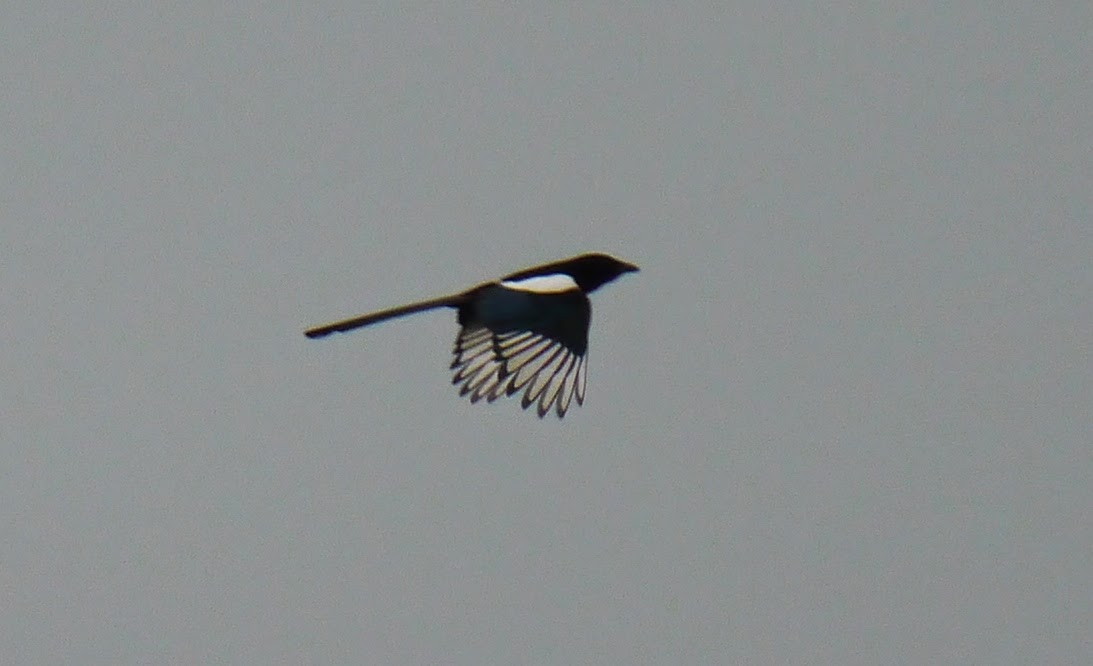
We had just got back from Frodsham Marsh (seeing a Marsh Harrier, plenty of White Throats and a group of three Redshanks) when I thought of the idea. Just look at the sun shining through the primaries on this magpie at the marsh. I was very hopeful about the moth trap because it was a warmer night.


After eager anticipation over night I got up at 5:30am as I couldn't wait to see what I had caught.  We have only set the trap up a few times this year (not catching much); however I have to say that night turned out differently.

The catch started off with a few smaller dart moths (like Shuttle Shaped Darts), but when we turned over the first egg box we saw and potted this stunning Chocolate Tip, a new species for me.

Chocolate Tip

Our second brilliant moth (well they all were) was the Pale Tussock, this would have to be one of the best moths I have ever caught. It was truly stunning, but wouldn't keep still for a photo (this moth is another first for me). It really is worth going to Google images and looking at the caterpillar for this moth, you won't believe it.

Pale Tussock

We set up the trap at the perfect time really as this is slap bang in the middle of their flight season.


Another new species for us was the Scalloped Hazel, this one below the more duller version than the second one we caught...

Scalloped Hazel

Now I said before the "dart" moths we caught included was the Shuttle Shaped Moth like these in the picture below.

Shuttle Shaped Darts

One of my favorite small moths included this beautiful Flame Shoulder, certainly easy to distinguish from most moths but dad (maturely) made me go and check it.

Flame Shoulder

Out of all the moths, the smallest was the Chinese Character, this was my dad's favorite and I have to admit it was quite nice and a bit mouse like.

Chinese Character

This moth below may look easy to i.d however it wasn't, we were tying between two moths that almost looked identical, however me and dad came to a final conclusion that it was a Dark Barred Twin Spot.

Dark Barred Twin Spot (maybe)

Now back to the Scalloped Hazel. In this picture you can clearly tell this moth on the right was much more striking and the f.nigra variety dark form. When we first saw the moth in the trap we had not a clue, but our copy of Field Guide to Moths by Paul Waring, Martin Townsend and Richard Lewington really helped.

Scalloped Hazel (we think).

To end the morning a male Sparrowhawk came to join us, sorry about the picture it was taken through the window.


Then after all that work in the morning it was time for school!

Thursday, 24 April 2014

Heronry Census with Professor David Norman

After a long but exciting wait I was finally able to get my chance to count the Herons as part of the Heronry Census coordinated by the BTO with Professor David Norman.

I was really glad to be out, and the Heron Counting started really well by straight away looking up to see a reasonably large Heron sat perched on a huge nest, obviously active due to all the white wash either on the bottom layer of the nest or the branches just below. 


Here it is again below, this time about to fly off.
We could also tell this was in use because of the broken egg shells littered all around the base of the tree (the eggs are normally a dark blue, however you normally see them more of a light blue colour because of the white wash covering the egg).


They were very interesting to watch, and it wasn't just heron eggs we found on the floor of the wood, in fact there was also one or two possible duck species which looked predated.


Normally when we looked up, a lot of the nests were in the Pine Trees, and as shown in the picture the nest can be rather small and even very see through. Normally they were quite a bit bigger however even the smallest of nests had activity including this one, and quite a few other nest of which a similar size. It mad me wonder how those bid chicks managed to stay in.


On the way back from the heronry we count we called in to see the land owner which David taught me is a very important part of the count. We were able to thank the land owner and report back to him on how the heronry count had gone.


It wasn't just Heron nests we found. Towards the edge of this hedge below, Professor Norman and I found a Dunnock's nest holding 3 lovely blue eggs, also great to see.  We also found the start of a Long Tailed Tit's nest, which looked very peculiar, with two separate parts to it.  It is always good to be out with someone else who thinks it is quite normal to have your head in a hedge.


Whilst counting the Herons we also got to do a little bird watching, the Buzzards and Rooks kept us entertained (as well as the Herons of course).

Overall, we counted 70 nests in use this year, this may seem a lot however Heron nest numbers here are dropping; so I wanted to ask if any of you had any thoughts on this? It will be interesting to see how the heronry counts across the country have gone and how overall numbers are doing. 


I want to say a really big thank you to Professor David Norman for letting me help and for sharing all his knowledge with me. I really did learn a lot, even how to recognise raptor poo!

Monday, 21 April 2014

BTO Workshop and Stone Curlews

Now I said in my last blog that the purpose of me visiting Norfolk was to deliver a talk explaining what birding means to me at the BTO Head Quarters (The Nunnery), which was all organised by A Focus on Nature (or AFON).

The day started with amazing talks from a mix of the BTO staff and how they got their jobs; so where they had studied, what they had studied  and all the volunteering and stuff they had done. They had all done such different things and some hadn't even been all that birdy until they started their BTO jobs. 

Before me and all the other young wildlife lovers begun to talk, we all had 4 workshop experiences to chose from, all of which could be career paths. Out of the 4 we all had to pick 3 and I chose nest recording, ringing and surveying. 

So ringing, possibly one of my favourite parts of bird conservation, was quite interesting as I could see how everyone was fully engaged with the demo. I think overall we had 45 minutes of observation and the odd time handling birds, including Blackbirds, a Blackcap and a Marsh Tit. Harry Martin (who travelled down to Norfolk with us) had never held a bird before, so he got to let most of them go, including the Marsh Tit. His smile was enormous.

One of the amazing walled gardens at the BTO HQ

Now on to nest recording; I am rather fond of this now as it's another great way of interacting and helping with bird conservation. This workshop experience was led by Dave Leech, a lovely, helpful and really knowledgeable man. He has been bombarded with tweets from everyone since he introduced us all to the wonders of ringing. 

Before we went out to see some nests, we were  given a talk by Dave so we could understand how to nest record and understand really what it is actually about.  He also tested us on our bird song recognition.  After the talk, we were led outside and shown some nests including a Chaffinch, a Song Thrushes and a Blackbird.

Dave Leech showing us the Blackbird nest

As you can just make out in the picture, the Black Birds had chicks, 3 in fact. By the way, if you ever want to nest record you are not allowed to handle the pulli, unless you're a qualified ringer. So even I wouldn't ever take a bird out of a nest.


A Blackbird chick in Dave's safe hands
Now before I go on to talk about the second part of my blog, I'm yet to tell you how my talk went with all the other young people, the audience and of course a Focus on Nature and the BTO (the people who invited me).
Before I started the talk, I had a bit of time to meet and talk to some of the people also talking and taking part; it was great to meet everyone and I made great friends with Toby Carter, Ben Moyes, Josie Hewitt, Alex Berryman, Ellis Lucas, Mya Rose Craig and Abbey Miller (her birdy sister Evie was in China so I didn't see her).

Now in a good way and a bad-ish way, I was talking first.  I myself am not the most confident person talking in front of a large audience, and I have to say when I first started I was a little wobbly but then I got straight into it after about 30 seconds and just let my feelings spill out (so I think it went okay).  I talked about what birding means to me and the importance of all the conservation things I try to help with like ringing, WeBS count and even blogging.  I even managed to ring everyone with my WildeAboutBirds wrist bands.

I was glad at the end to meet everyone; it was great to talk to Ieuan Evans and see Andy Clement again, well I mean it was great to meet everyone, so I would like to say thank you to everyone who helped and supported me throughout that talk and everything that led up to it. But a really special thank you to Lucy McRoberts from AFON who organised it all.

I really, really learnt a lot and met some amazing people who I know I will see again. 
......................................................................................

Stone Curlews

Now onto my second part of my blog, Stone Curlews. After the whole BTO day was finished, me and my family, Alex Berryman, Josie and Josie's mum (Alison) went to see if there were any Stone Curlews about at Weeting Heath, and fantastically enough there they were. I think these birds have eyes like Sparrow Hawks (only a bit more bulging) and remind me of prehistoric birds.


Out of the whole visit we managed to spot 4 birds (you can only see 3 in the next picture, as the fourth was sitting in a nest further away down the field).

These were really interesting to watch and you will see some of their behavior in the pictures below (thanks mum for the pictures).


In these 2 pictures below, you can see that 2 males were fighting whilst a female was watching (it was quite intense).


There was also an awful lot of displaying going on, as you can see in the picture below.


When we arrived to watch them, they were right up close and we got some great views, however they soon started to drift away, and one male kept trying to nest change with it's chose female.


On the way out of the hide we bumped into Ellis and his dad who had also gone to see them. I really hope I meet all these people again, they just feel how I feel and I can talk to them about all the things I really love.

I have really enjoyed my time in Norfolk and it would be great if I could go again. It has been a pleasure meeting everyone, and I can't wait until something like this happens again. So no pressure Lucy McRoberts!