Thursday, 5 June 2014

100,000 Thank Yous

Today my blog reached 100,000 page views.

I just wanted to say the biggest thank you to all of you who have read my blog, commented and supported me. All you encouragement makes such a difference and your help and advice in the comments is helping me learn so much.

Thank you again.


And we have to have a bird picture of course.

Wednesday, 4 June 2014

The Hay Festival

Half term finally came and was full of great surprises and experiences, and the first great one came when I was at the Hay Festival in Hay-on-Wye. The main purpose of me being here was to be on a panel in front of a rather large audience for a discussion with RSPB Cymru. 


Of course, from where I live, it is quite a long drive to Hay, so we decided to stay over night; and you know those really tight confusing lanes? Well we spent half an hour searching for our place, and it turned out that the actual place we were staying in was in someone's home (with them) down a beautiful country track. 

After we'd met the home owners, explored the garden and looked at the brilliant wildlife it was soon my bed time. I'd had such a tiring day and a brilliant but nervous day still to come; my talk on stage with the RSPB and other panelists. 

Now before we set off it was pouring with rain and when we arrived the parking it already quite muddy! Before we went for a look around, we got all our gear ready and looked to see if we could see any wildlife (as it was in quite a rural area).

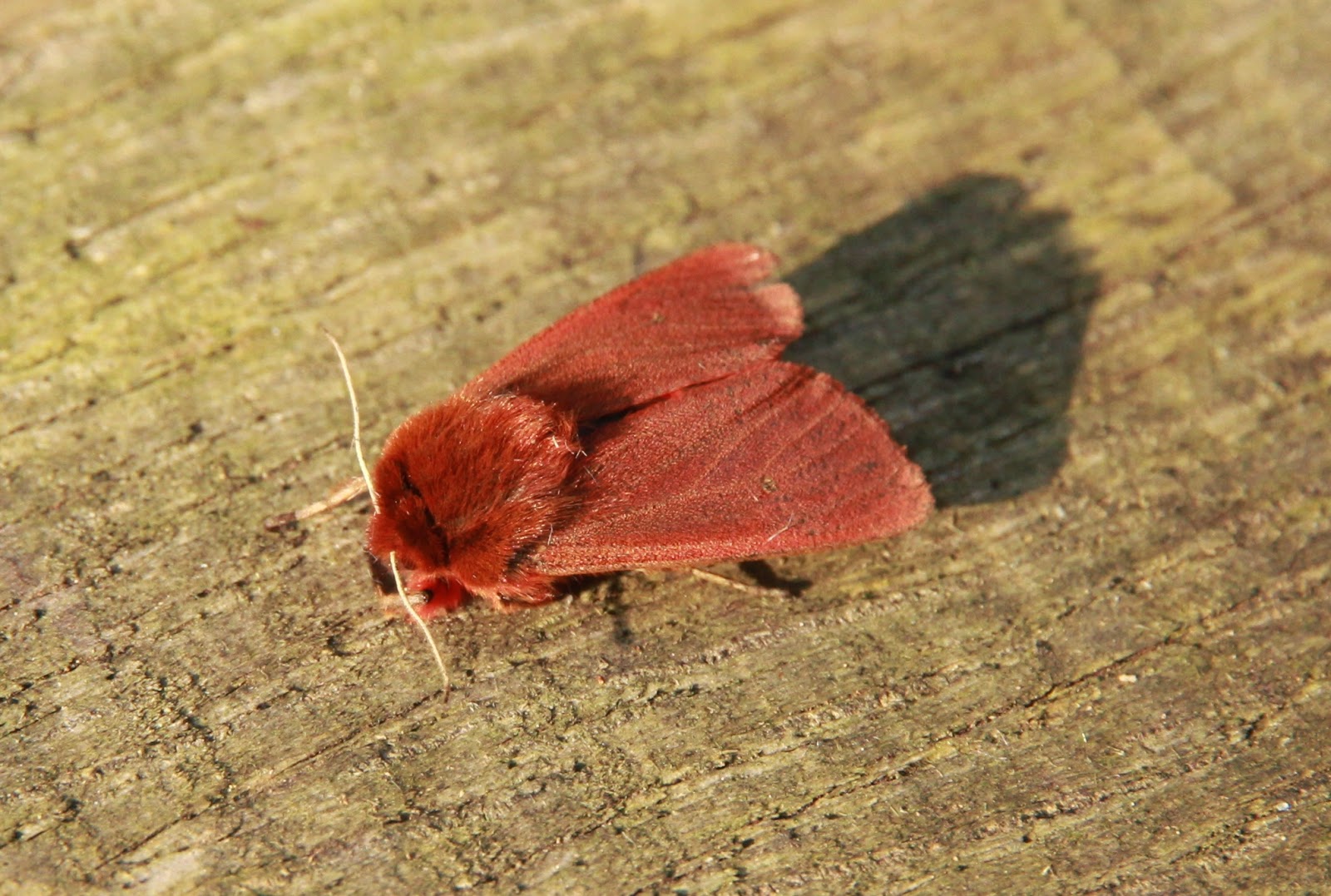
As the event was in a rather large field, it was probably filled with insects before all the tents went up, and someone enjoying the "fake grass" was this Buff Ermine. A lovely moth which we have been catching in our moth trap at home.


As we wandered around we found lots of different kids activities to do with writing and things like that (the event is to do with literature and books after all) and as we looked around I noticed this big black board saying "Before I Die".  All the kids had written lots of weird things but I decided to write something important and something I really mean to do..............


As you can see I wrote "Save the worlds birds" and at the end added the extinction symbol. So I tried to make people at the festival realise that it isn't just books that are important, but also the real world we share with our birds and wildlife.


After we had explored the Hay Festival, but before my event, we went to listen to a talk in the TATA tent, and the guest speaker we went to listen to was Robert Winston a famous scientist who specialises in Biology. It was a really engaging and interesting presentation and gave me a few tips on how I should speak to the audience coming to the event I was in later. 


My turn finally came round, however before I was up on stage I was transferred into the Green Room where the people talking had a chance to relax and meet the other people also talking before you went up on the actual stage.  The Green Room was full of people waiting to give talks on the books they had written.  This is what was written in the programme about the event I was in:

HUNGRY CATERPILLARS AND FANTASTIC FOXES: GIVING NATURE A HOME IN YOUR GARDEN
Discover how your family can get gardening for wildlife and discover a secret world. Ask the experts as they share their ideas and experiences. Author Kate Bradbury is joined by 12-year-old wildlife blogger Findlay Wilde and Jane Richmond from the National Botanic Gardens of Wales. The Director of RSPB Cymru, Katie-Jo Luxton, is in the chair.


Before the actual event started I got chance to meet Jane Richmond, Kate Bradbury and Katie-Jo and they were all really kind and helpful e.g. giving last minute tips on how the event would run.  However, I had already had a good chat with Katie-Jo on the RSPB stand earlier.


So the time finally came, however as nervous as I was before, as soon as I sat in the chair courage surged straight through me and I answered all the panel and audience questions as well as I could.  It was great to be able to share my passion and hopefully get more people to get outside with their children and enjoy the nature in their gardens.


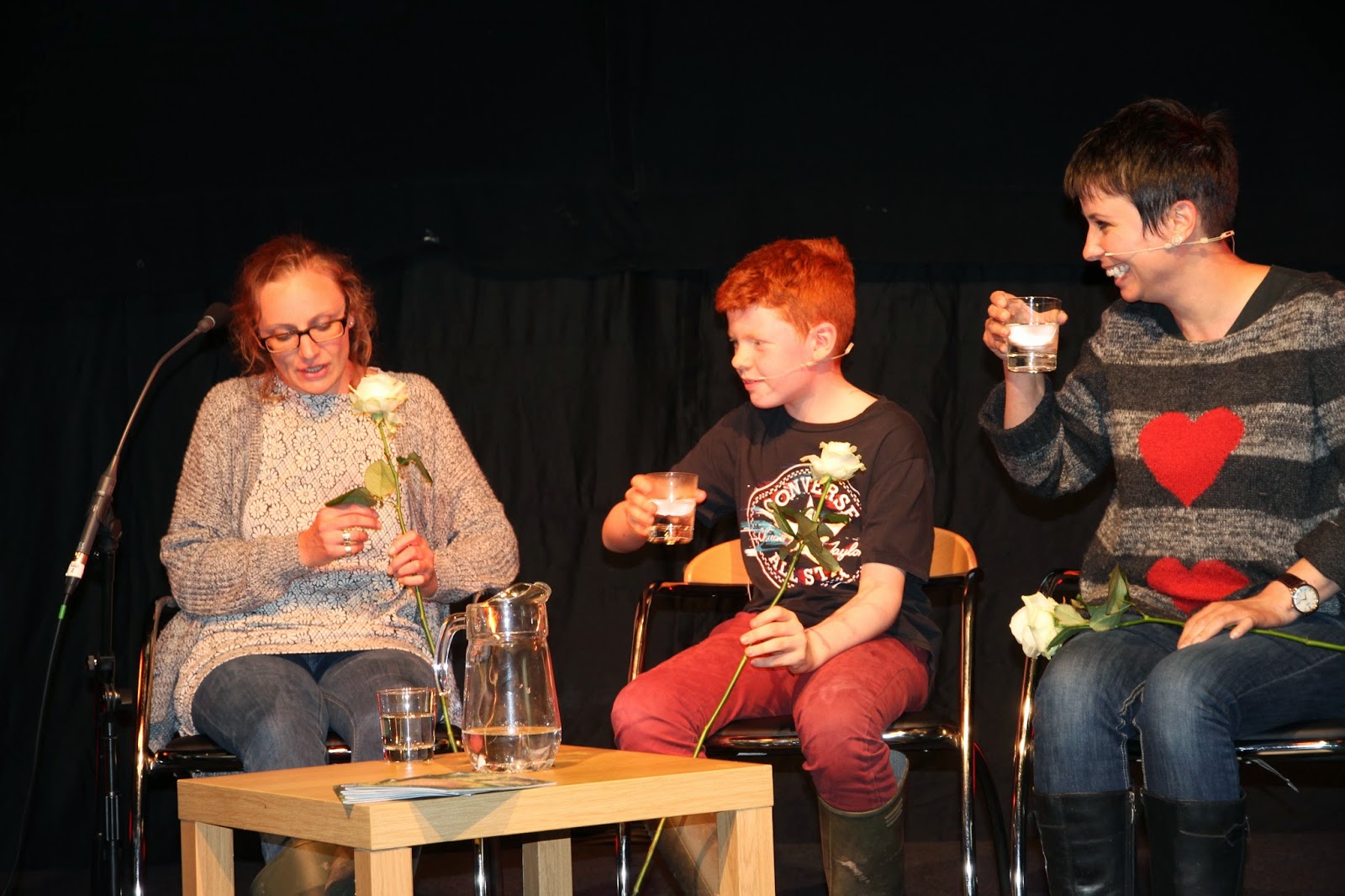
At the end it was great to have my picture taken with the other three people I was speaking with. However after the talk I also met up with someone called Hugh Brazier, someone I met for the first time at the Bird Fair last year, so it was great to meet up with him again.


I really enjoyed the event and I wanted to share one of the most important things that I think came out of the discussion. Everyone with a garden has their own little nature reserve to protect and develop. But all these mini reserves together make up a really important and safe place of our fabulous wildlife. 

So what will you do with your nature reserve?

Thursday, 29 May 2014

A Blackbird Nest Record

Blackbirds are typical garden bird and a bird that nests in our garden every year. This year we followed in their foot steps all the way through from building the nest to the chicks fledging. Every year two pairs of Blackbirds battle try to nest in our thick Leylandii Hedge and in our Wisteria. This year the pair in the Wisteria claimed the garden as their territory and I only noticed they were nesting when I saw the female fly up from the lawn into the tree with nesting material. Blackbird nests are usually quite easy to find, however they can be quite tricky when they are located in bramble bushes and things like that, but they are worth looking out for.

18th April - Nest Found in Wisteria

As the days past the nest was almost complete, however they still needed to line it. I thought the Blackbird had abandoned the nest as it seemed to disappear 2 days earlier before the nest was lined line it so I was quite chuffed to see it back, especially as there were Magpies lurking in the trees nearby.

20th April - Nest not lined yet

After the nest had been lined by grasses, we checked it again and found that she had laid two eggs. This was really exciting, however in our garden we had Magpie's attempting to nest and on the look out for an easy snack. They did steal one egg however the male Blackbird kept fighting them off.

24th April - Nest lined and 2 eggs

The female started to incubate the eggs, so when she got off the nest we went to see how many eggs there were now. When we looked, it was great to find that there were actually five eggs, fantastic news.

25th April - Female starts to incubate the 5 eggs

As I watched the female feed herself, I waited in eager anticipation  for the chicks to hatch. The male Blackbird was never far away and stayed on Magpie and Starling duty, doing a great job.

Female taking a quick snack break - I put meal worms out for her.

And then after about 2 and a bit weeks the eggs finally hatched and then guess what popped their heads up. Five gorgeous naked chicks; it was great to see them hatched, however they were more prone to predators now with all the activity of feeding and the noise they were making.

11th May - all 5 chicks hatched and the male Blackbird brings in food with the female

As the chicks grew, both the male and female Blackbirds brought in food. The chicks started to fill the nest and it wouldn't be long before they fledged.

Chicks at 8 days old

The adults were quite used to us being in the garden and seemed quite relaxed flying between the Blackthorn tree and the Wisteria. We had planted some trees and I put a few worms we dug up out for her. She was down to get them in seconds.


By Saturday 24th May (the day before they fledged) all five were standing high out of the nest thinking about fledging and peeping out ready for their last meals in the nest.

24th May - Day before fledging

Finally on Sunday 25th May they all left the nest. Four were really sensible and went into our big Leylandii hedge; however one sat in the neighbours long grass underneath their garden chairs. This worried me because it was just below a dead tree where Jackdaws and Magpie's like to gather (also prone to cats). I didn't need to worry though, the female Blackbird visited it regularly with food and the male chased the magpies away.

Newly fledged Blackbird being fed

As I write this blog, all 5 fledglings are in the garden and doing really well. It has been such a great experience watching the whole process. They have had a great start in life, I wonder what the future holds for them.

Tuesday, 27 May 2014

Choughed to be Out

I was so excited and very privileged to be out ringing some very special birds on Saturday. I had been invited by Kelvin Jones from BTO Cymru last year (at the Bird Fair) to take part in ringing Choughs. I have waited ages for this day to come and it didn't disappoint one bit. I have seen Choughs over at South Stack several times and down in Cornwall when I was on holiday. So to have this opportunity to get up close was always going to be special. 

Me and my dad set off early as we knew the traffic could  be bad and we wanted to check out a small Nature Reserve called Spinney on the way that we hadn't been to before.  It was great there. It looks out over the estuary which was full of Little Egrets and we also spotted the odd Red Breasted Merganser. 


As we were watching a pair of Great Crested Grebes were being mobbed by a single Oyster Catcher. But then the rain kicked in so we moved on to where we were supposed to be meeting Kelvin.

As we arrived early we decided to have lunch at a cafe with a great view over a Lake, which this time had Goosanders on it. It was a brilliant start to the day, but I had a feeling that it could only to get better.

 Kelvin turned up and explained to us the plan for the day and where we were heading .We were also meeting Adrienne Stratford. Adrienne is amazing and is so knowledgeable about Choughs. She has been studying them for a very, very long time and has been able to understand more about these special birds - how and where they breed, their movements, their social lives etc. Colour ringing the Choughs has been an essential tool  in studying these birds. Not only that, she does all the rock climbing as well! Her dedication to Choughs was so Inspiring.


Before we started the journey up the mountain we had to unload the ladder and get out all the ringing equipment into a bag. We then set off up the cliffs (which was quite a trek).  As we set off we were treated to a pair of Wheatears foraging for food. However as we continued further up, the adult Choughs gave me a hint of where the cave we were heading towards was.


After the trek up the cliff we entered the mouth of the cave. As you can see in the picture below, Adrienne had to use some good climbing skills to get to the nest, as the walls were just plain slimy and the cave was full of water. We ensured the ladder was firm and safe and that the rope would not come undone. After Adrienne came back with the Chough chicks, she explained everything I needed to do, and then it was my turn to get involved.


I have to say the young birds were quite big (at least twice the size of a Blackbird) and a bit wriggly when held, so I let it sit flat on my lap which made it easier for me and more comfortable for the bird. 


After the ringing part was done it was time to do all the other processing i.e. weighing and measuring (the wing and the tarsus). All this data goes into the Chough Project which is really important. 


In this nest we found two chicks. Whilst I went on to ring my second one, Adrienne went to colour ring the first. That was amazing to see how she  uses the colour coded rings for recording data. Using codes and colour sequences on the rings helps tell you where the birds have come from if you see them again. You can then of course look back through the data and see how old they are etc. If you are out and about and see a colour ringed Chough please pass the information on to The British Trust for Ornithology.


Wow, a very lucky me ringing a Chough.


There was some deep sadness attached to the day though - whilst visiting our second nest site later in the day. Adrienne climbed up to the nest to get the chicks for ringing and they had gone- which was immediately very worrying and puzzling.  Then we spotted them dead on the floor - how had they got there and how had they died ? Adrienne suspected foul play and it looked like the birds had been taken out of the nest and crushed. Who would do such an evil thing; that got me really angry. 

To finish my blog post I want to end on a happy note and whilst I was ringing Choughs, I also saw my first ever Cuckoo of the year and in my life! An absolutely brilliant day.  

Thank you so much to Kelvin and Adrienne for letting me join them today and for explaining so much about the project to me. I wonder what lies ahead for the two chicks I ringed today - good luck to them, they will probably need it.

Tuesday, 20 May 2014

Road Hog

We haven't seen a hedgehog around where I live for quite some time, so it was a pleasure to find one a couple of days ago patrolling the lane near our house.

Nothing was getting in it's way, not even the neighbours cat.


We watched it to make sure it got safely into a garden and away from the lane.  I really hope I see it again soon.

Sunday, 18 May 2014

Swallows & Barn Owls

Today was all about our RAS projects we are working on (Retrapping Adults for Survival
We were very disappointed that we couldn't get out last week, as the weather was so bad which was so frustrating, as we'd had good hopes to steadily increase our numbers on the Blackcaps.

Our first RAS today was based on the Blackcaps. When we arrived several were singing and calling but working out territories is proving tricky and they did not respond very well today. It was interesting to catch a male which was caught a week or so ago and what appears perhaps to be an unpaired male.

Now after the poor start of Blackcaps we went onto our second RAS of the day; this time for Swallows. We managed to catch 55 birds of which we ringer 48. Some of the retraps were birds we had ringed the year before and some were controls (i.e from other sites). How amazing that these birds have have come back from South Africa to be with us for the summer!


One of the barns we went to contained an occupied owl box and a Kestrel nest. We firstly checked the Kestrel nest and found that the pair were on 5 eggs, fantastic news.

After we had finished with the Kestrel's nest we checked the Barn Owl's which contained 2 chicks and a couple of eggs. Barn Owls had a disastrous breeding season year last year, so it was again fantastic news. (You can find out more about Barn Owls on the Barn Owl Trust website).


This was quite early for the Barn Owls and the chicks are almost ready to ring. I never get tired of seeing these stunning adults up close, they are amazing to see and memories I will never get tired of looking back at.

I hope you all had a great weekend and thanks for reading!!! 

Thursday, 15 May 2014

What A Spectacle!

  As there is a band of warm air moving through Britain this week, I decided to set my moth trap up to see what we could catch, and compare it to last week's. The catch was quite fascinating as always and a whole new array of different species of moth ended up being caught, including all these...

Ruby Tiger the second species of Tiger moth I have ever caught, it was the first species of moth we potted and an amazing delight to see. I think most people don't even know these moths exist - they don't know what they are missing.

Ruby Tiger Moth

It was great to photograph, especially in the sun, and probably one of the best (colour wise) moth we caught through the session.

Ruby Tiger Moth

As you can see in this picture, this species of moth isn't just red on the top, but is a gorgeous scarlet red underneath as well. 

Ruby Tiger Moth

Even though I have caught these moth several times before, it was the first time this year I had caught a Hawk Moth, let alone a Poplar Hawk moth, and best of all there were two in the trap. That orangey pink colour of the under wing is really quite striking.

Poplar Hawk Moth

Another new species of moth for us included this moth called a Spectacle Moth; you might guess where it gets it's name from. I think it is just incredible the range of moths you can get and how they have evolved. 

Spectacle Moth

There is another species of moth that looked almost identical to the Spectacle Moth and this is the Dark Spectacle, however you can tell the difference because of how rough the edge of the Spectacles wing is compared to the likes of the Dark Spectacles wing which is smooth. They also come out at different times of year.

Spectacle Moth

Another species of moth this morning was the Brimstone; a beautiful species which stands out from the crowd .We had a total of 8 in the trap.


This in one of my dads favorite moth, it is called the Buff Ermine, a beautiful moth and the first one we had caught this year. 

Buff Ermine

The biggest moth we caught (apart from the Poplar Hawk Moth) was this Waved Umber, this moth really caught your eye and looked absolutely stunning, but wouldn't stay still for a picture!!!

Waved Umber

At first I thought this moth was a butterfly, however it was a moth called a Clouded Silver, this was one of the first moths that caught our attention inside the trap. 

Clouded Silver

Once we caught and potted all the moths on the inside of the trap we started scanning the grass on the outside of the trap, we came across two new species of moth for the garden; this first one called a Broken Barred Carpet.

Broken Barred Carpet

The second was a moth called a Pale Prominent. This moth reminded me of a dragon even though it doesn't look like it in the picture. It looked just like a piece of  tree bark and was rather hard to spot in the grass.

Pale Prominent

I hope you enjoyed the moths just as much as I did, I am becoming Wilde About Moths as well now!  All the moths are safe in the shed and will be set free after dark so the birds don't get them.